Composite veneers usually cost about $250 to $1,500 per tooth in the United States. They often cost less upfront than porcelain veneers, but they may stain, chip, and need replacement sooner, so the lower starting price is not always the lower long-term cost.
If you want to improve chipped, stained, uneven, or slightly gapped front teeth, veneers can help you compare what looks natural, what lasts longer, and what fits your budget. At Simply Veneers in Newport Beach, we explain the trade-offs between composite and porcelain so you can choose the option that best supports your smile goals.
Composite veneers are thin layers of tooth-colored resin shaped over the front surface of a tooth. They are often used to improve small chips, minor gaps, discoloration, uneven edges, or teeth that look slightly small or irregular.
The resin is similar to the material used in tooth-colored fillings. Because it is placed and sculpted directly on the tooth, treatment can often be completed in one visit and may require little or no enamel removal.
Composite veneers are cosmetic treatment, not a fix for unhealthy teeth. Cavities, gum disease, infection, or significant structural damage usually need treatment first.
The total cost depends on how many teeth are being treated and how much reshaping or color correction is needed. A small repair on one tooth usually costs less than creating a balanced result across several visible front teeth.
Other factors that can affect pricing include:
Dental insurance often classifies veneers as cosmetic treatment and may not cover them. Coverage may differ when composite is used to restore damage from injury or decay, so it is smart to request a written estimate and confirm benefits directly with your insurer. Learn more about whether insurance covers veneers.
Porcelain veneers usually cost more, often around $900 to $2,500 or more per tooth, and they typically require laboratory fabrication. See our porcelain veneers cost for a closer look.
Composite veneers often preserve more natural tooth structure and are easier to repair if a small area chips. However, they can lose polish over time and are more likely to absorb stains from coffee, tea, tobacco, and strongly pigmented foods.
Porcelain veneers often last about 10 to 15 years or longer with good care, while composite veneers commonly last 4 to 8 years. These are broad estimates, not guarantees, because bite forces, oral habits, hygiene, diet, and the amount of resin all affect longevity. Read more about how long veneers last.
Neither option is truly permanent. Even conservative veneers may lead to future maintenance, repair, or replacement, and any enamel removal cannot be reversed.
Composite veneers can deliver a noticeable cosmetic improvement at a more accessible starting price. They are often a good fit for patients who want to correct modest shape, spacing, or edge concerns without moving to a more extensive restoration or a full smile makeover.
They are less predictable for major color changes, severely rotated teeth, large fractures, or teeth with extensive existing restorations. If too much material is needed to hide a bigger problem, the result can look bulky or affect the bite.
Depending on the concern, alternatives may include professional teeth whitening for general discoloration, orthodontic treatment for crowding or spacing, enamel contouring for small edge irregularities, or a crown for a tooth that is significantly weakened.
For broader planning and combination treatment options, consult a cosmetic dentistry specialist. A dentist should explain why the recommended treatment fits the health of the tooth, not just the appearance.
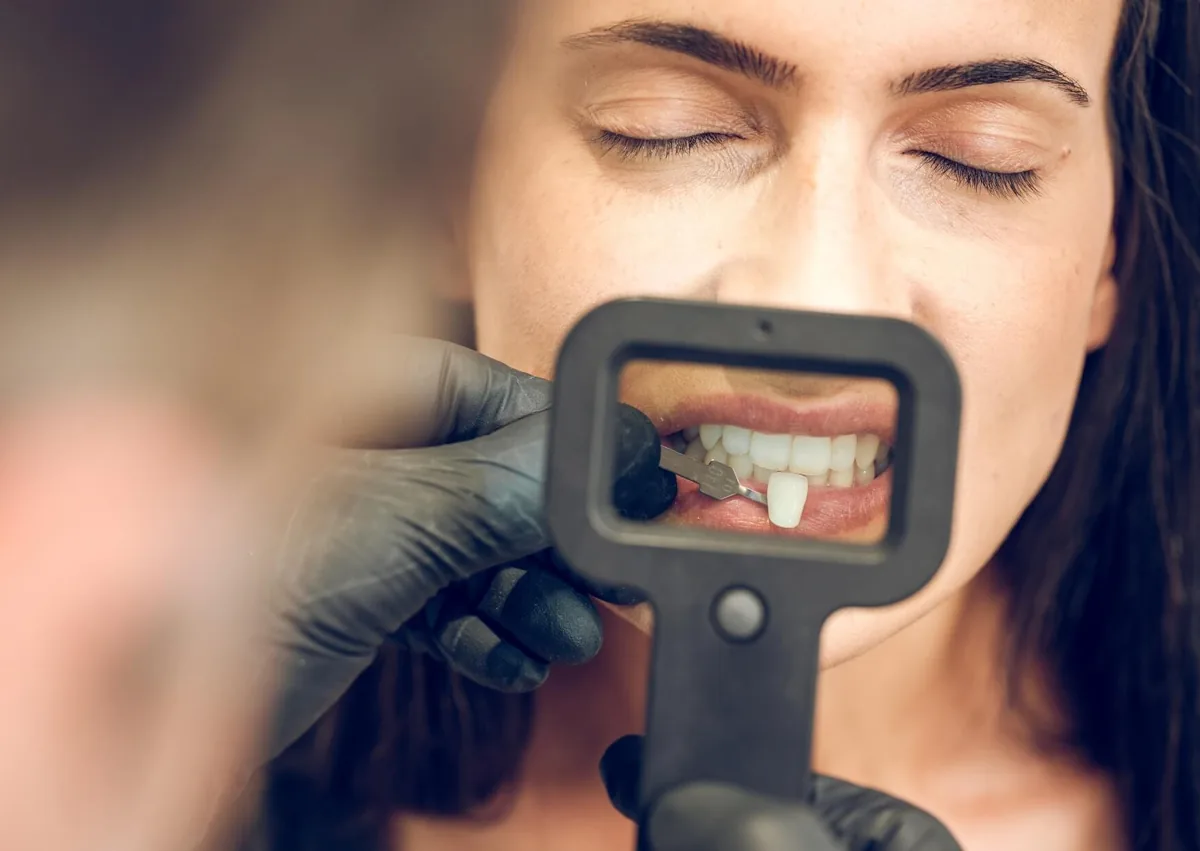
The dentist starts by examining your teeth, gums, and bite. Photos, X-rays, or diagnostic models may also be recommended if they help with planning or reveal underlying issues.
During treatment, the tooth surface is cleaned and lightly conditioned so the resin can bond properly. The dentist places the material in layers, shapes it, hardens it with a curing light, and then adjusts and polishes the final result.
Numbing may not be necessary when no tooth reduction is planned, though sensitivity varies from person to person. Most patients notice pressure, mild gum tenderness, or a slightly different bite at first, but significant or worsening pain is not expected.
Contact your dentist promptly if a veneer breaks, feels loose, or keeps your teeth from meeting normally. Facial swelling, fever, trouble swallowing, trouble breathing, or rapidly worsening symptoms need urgent dental or medical care.
Brush twice a day with fluoride toothpaste, clean between your teeth, and keep up with regular dental visits. Your dentist or hygienist can also recommend products that clean well without roughening the resin surface.
Avoid biting ice, pens, fingernails, or hard foods with veneered teeth. If you clench or grind, a professionally fitted night guard may help protect the resin and extend its lifespan.
Composite veneers can often be polished or repaired without replacing the entire restoration. Ask whether future polishing, repairs, and replacements are included in the quoted fee or billed separately. For more detailed guidance, see how to care for veneers.
A good candidate usually has healthy teeth and gums, realistic cosmetic goals, and enough sound enamel for reliable bonding. Composite may be especially appealing for smaller changes, a lower initial budget, or a preference for a treatment that can often be repaired conservatively.
Untreated cavities, active gum disease, severe enamel loss, major bite problems, or heavy uncontrolled grinding can make treatment less predictable. In those cases, improving oral health first or choosing a different option may lead to a safer and longer-lasting result.
It makes sense to schedule a cosmetic consultation when a chip, gap, shape concern, or discoloration keeps drawing your attention and you want a realistic comparison of options. A clinical exam and personalized estimate are the only way to know whether composite veneers are appropriate and what the full cost is likely to be.
For a personalized estimate and to review conservative composite versus porcelain options, a short cosmetic consultation is the appropriate next step to clarify trade-offs and expected results. Simply Veneers focuses on veneers in Newport Beach and serves patients near Huntington Beach and Newport; call (949) 777-1000 to schedule.
A full-smile plan varies because some patients need six, eight, ten, or more teeth treated depending on how many teeth show when they smile. Multiplying a per-tooth estimate gives only a rough range, so ask for an itemized quote that includes preparation, finishing, follow-up, and any expected repairs.
The terms often overlap because both treatments use composite resin bonded to a tooth. “Veneer” usually refers to coverage across most of the front surface, while “bonding” may describe a smaller repair, which can cost less because it uses less material and chair time. See our teeth bonding vs. veneers for a direct comparison.
Insurance usually does not cover veneers done only to improve appearance. Partial coverage may be possible when composite is used to restore damage or lost tooth structure, but the dentist and insurer still need to determine whether the procedure meets your plan’s criteria.
They may be more reversible than porcelain veneers when little or no enamel was removed, but complete removal without affecting the underlying tooth surface should not be assumed. Ask your dentist how much preparation is planned and what the tooth would likely need if the veneer is removed later.
Yes. Composite resin can discolor and lose shine over time, though regular professional polishing, good home care, and limiting tobacco and dark beverages may help preserve the appearance.




