Teeth under veneers are still real, living teeth. Their front surfaces are often permanently altered to create room for the restorations, but with a good fit, healthy gums, and regular care, those teeth can stay healthy for many years.
If you are wondering whether veneers will protect or harm the teeth underneath, it helps to know exactly how much of the natural tooth stays in place and what long-term care looks like. At Simply Veneers in Newport Beach, CA, we help patients understand preparation, longevity, and maintenance so they can choose a smile upgrade with confidence.
A veneer is a thin shell bonded to the front of a tooth to improve color, shape, size, or minor alignment issues. Porcelain veneers usually require a dentist to remove a small amount of enamel, though the exact amount depends on the tooth, the design, and the final result.
Because enamel does not grow back, traditional veneers are usually irreversible. If a tooth is prepared for veneers, it will usually need veneers or another restoration in the future.
Some minimal-prep or no-prep veneers preserve more enamel. However, they are not right for every case because adding material without enough space can make teeth look bulky or create edges that are harder to clean.
Before final veneers are bonded, prepared teeth often look slightly smaller, duller, or rougher. They are usually not shaved into tiny pegs, which is more typical of crown preparation than veneer preparation.
Temporary veneers may be placed while the final restorations are being made. During that stage, teeth can feel more sensitive, and the temporaries may feel less smooth or polished than the final veneers.
Once the veneers are bonded, the veneer becomes the visible outer layer and the natural tooth remains underneath. The tooth still needs normal dental care because the veneer does not stop decay, gum disease, cracks, or normal aging.
A cavity does not usually form through intact porcelain. Instead, decay may begin near the veneer margin if plaque builds up, the bond weakens, or part of the natural tooth is difficult to keep clean.
A dentist may find decay through an exam, X-rays, or signs like a dark edge, new sensitivity, pain, looseness, or a bad taste. Early problems may be repairable, but more advanced damage may require a new veneer, a crown, root canal treatment, or, in severe cases, tooth removal.
Gum irritation can also happen around veneers if plaque collects at the edges or the restoration shape makes cleaning harder. Bleeding, swelling, or ongoing tenderness is not something to ignore.
Composite bonding adds tooth-colored resin and often removes less enamel than porcelain veneers. It is usually easier to repair and may cost less, but it tends to stain, chip, and lose its polish sooner.
Professional teeth whitening can brighten natural teeth without changing their shape. It cannot fix chips, worn edges, spacing, or shape concerns, and existing veneers will not whiten with the surrounding teeth.
Orthodontic treatment moves teeth instead of covering them, so it may be a more conservative option for spacing, crowding, or bite concerns. Crowns cover the full visible tooth and can help when a tooth is heavily damaged, but they usually require more reduction than veneers; see our comparison of crowns vs. veneers.
A consultation with a cosmetic dentistry provider can help you compare how much tooth structure each option preserves and which result best fits your goals.
Porcelain veneers often last about 10 to 15 years, and some last longer. They are not lifetime restorations, and their lifespan depends on enamel quality, bite forces, oral hygiene, material choice, placement quality, and habits like grinding; learn more about how long veneers last.
Planning usually includes an exam, photos, and X-rays when needed. Your dentist should also check for cavities, gum disease, enamel wear, grinding, and bite issues before moving forward.
If tooth preparation is needed, local anesthetic usually keeps the area comfortable. Mild soreness or cold sensitivity can happen afterward, especially while wearing temporaries, but it should improve.
At the bonding visit, the dentist checks the fit, shade, and bite before securing each veneer. Teeth may feel a little different at first, but most people adjust within a few days.
Persistent pain, worsening sensitivity, a bite that feels off, or a loose or cracked veneer should be evaluated. Swelling, fever, trouble swallowing, or trouble breathing needs urgent care, and breathing or swallowing problems require emergency attention.
Brush twice a day with fluoride toothpaste and clean between your teeth every day. Pay close attention to the gumline and veneer edges, where plaque is most likely to collect.
Regular dental visits help monitor the veneer margins, your gums, your bite, and the teeth underneath. For more practical tips, see our guide on care for veneers.
Avoid using veneered teeth to open packages or bite nails, ice, or other hard objects. If you clench or grind, a custom nightguard may help protect both the veneers and the natural teeth supporting them.
If a veneer feels rough or loose, do not try to remove it or glue it back yourself. Have it checked so the dentist can evaluate both the veneer and the tooth underneath.
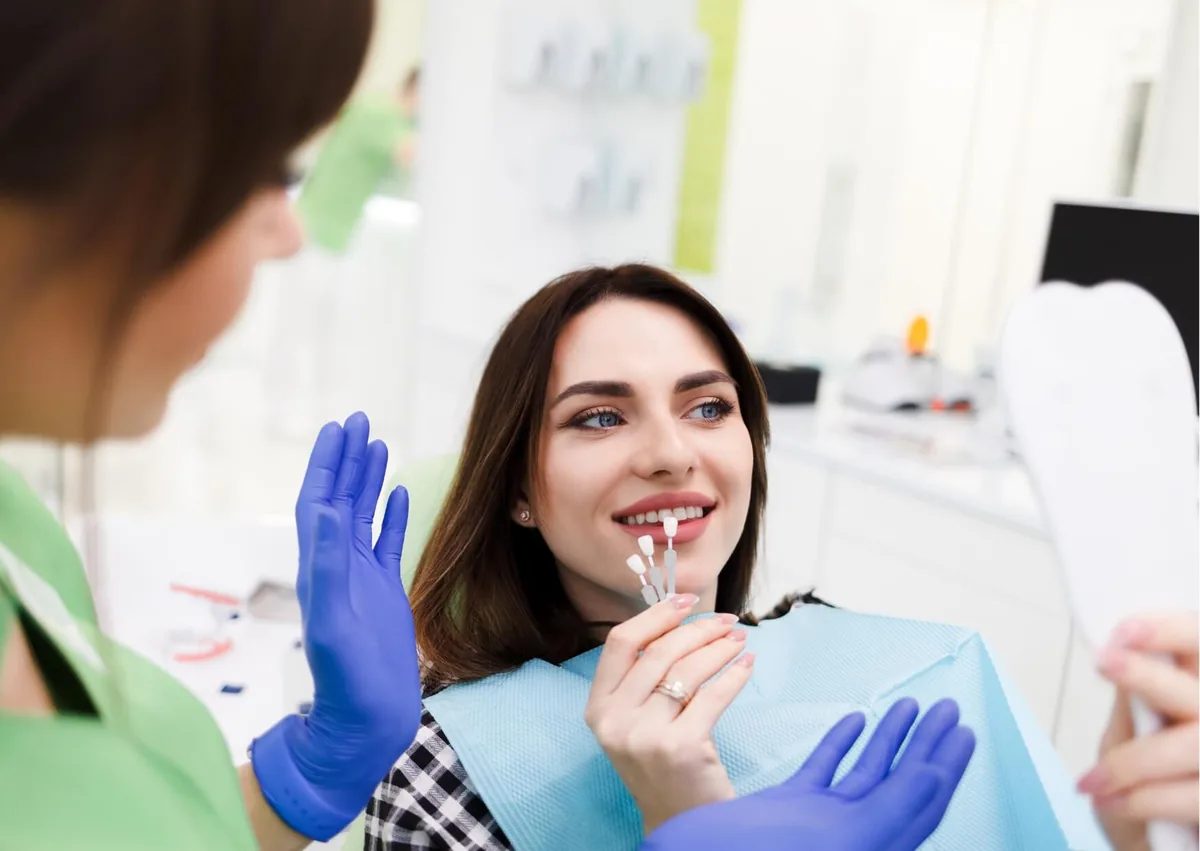
Veneers may be a good fit for adults with healthy teeth and gums who want to improve discoloration, small chips, worn edges, minor spacing, or shape concerns. Adequate enamel matters because bonding is usually strongest and most predictable on enamel.
Veneers may not be the best first step if you have untreated decay, active gum disease, severe enamel loss, major bite problems, or uncontrolled grinding. Teeth with large fillings, deep cracks, or significant structural damage may need a different type of restoration.
It is worth scheduling a cosmetic consultation if you are considering veneers, replacing older veneers, noticing pain or staining at the edges, or exploring a smile makeover. An in-person exam can show how much enamel would need to be removed, whether a more conservative option could work, and what long-term maintenance to expect.
A targeted exam can determine whether a repair, replacement, or alternative cosmetic option best protects the tooth beneath a veneer. Call Simply Veneers, specialists in veneers in Newport Beach who also serve Huntington Beach and Newport, at (949) 777-1000 to schedule an appointment.
Not just because they have veneers. Decay risk goes up when plaque collects at the edges, oral hygiene slips, or the veneer no longer seals well.
Not necessarily, but teeth prepared for traditional veneers are permanently changed because removed enamel does not grow back. In most cases, they will still need replacement veneers or another restoration.
Often, yes. Dentists can check the veneer margins and use X-rays when appropriate, though in some cases the veneer may need to be removed to see the full extent of the problem.
Some temporary sensitivity is normal after enamel preparation and bonding. Sensitivity that is severe, lasts longer than expected, or gets worse should be evaluated.
Yes, veneers can loosen because of bonding failure, decay, trauma, or heavy bite forces. Keep the veneer safe, avoid chewing on that tooth, and contact a dentist rather than trying to reattach it yourself.




